The Oldest Free Highland Games, Since 1314.
A Brief History of the Ceres Highland Games
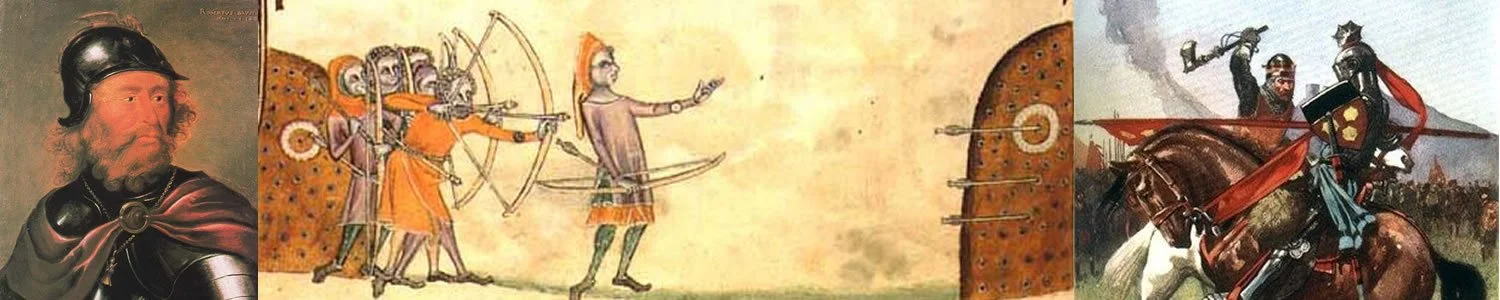
It is said that Sir Robert Keith, Great Marischal of Scotland, instructed the men of Ceres in the use of the bow, prior to the Battle of Bannockburn in 1314. This instruction apparently took place upon the village green now known as the Bow Butts. It is upon this green that the annual village games are held, since the charter to hold a market was given, it is said, to the people of the village by Robert Bruce himself, in celebration of the victorious return to Ceres of the men who fought at Bannockburn.
No other Highland Games can claim the continuous history of the Ceres Games, which, despite the disapproval of the 16th Century kirk, have continued without interruption since 1314, except during the periods of the Act of Proconscription (1746-1782) which followed Bonnie Prince Charlie's rebellion, the Great War years and latterly in 2020 when COVID struck. They were originally always held on the 24th of June each year, the anniversary of the battle, but it has recently become more convenient to hold them on the last Saturday of June.
Whilst Highland Games, as we know them, only came into being in the early 19th Century, there are a few snippets down the years that describe events at these early gatherings. It is said that King Malcolm III of Scotland, in the 11th century, summoned contestants to a foot race to the summit of Craig Choinnich (overlooking Braemar). King Malcolm created this foot race in order to find the fastest runner in the land to be his royal messenger. Some have seen this apocryphal event to be the origin of today's modern Highland games. According to a German reference quoted in Redmond, at the Ceres games in 1332, "a heavy rock was fetched from the bed of a mountain stream, and the hammer was a huge club with an iron head." Maybe the “heavy rock” was the first Ceres Stane, though sadly not the one we have now which was produced in the early 20th Century. '
Any form of gatherings were prohibited by the Act of Proscription in 1746 which followed the unsuccessful rebellion of 1745. This act outlawed Scottish customs, dress and gatherings. One must assume the Ceres market was kept as such without any sporting events. The act was appealed in 1782, whereupon Highland games began to be revived. The revival was greatly accelerated in 1822 by the appearance of King George IV in Edinburgh dressed in Scottish garb. This event started a fad for all things Scottish, and many of the things regarded as "traditional' at the Scottish games of this period, including the vast majority of tartan patterns.
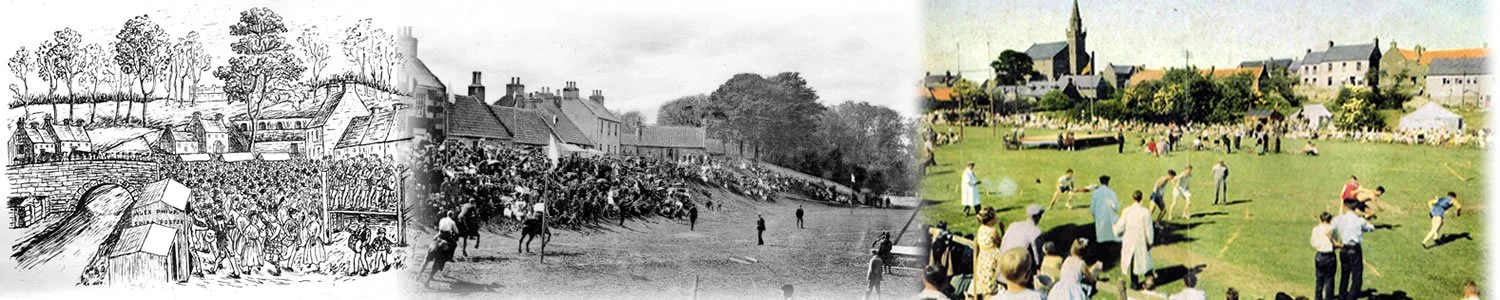
Until the end of the last century, the June meet in Ceres were of two days duration, the first of these days being Market Day. The village would buzz with activity as farmers drove their animals to the green. Ordinary store cattle would assemble on the tower green, highland cattle on the upper, whilst milking cows were ranged along the Croft Dyke close to the houses. Gypsy caravans would assemble on the upper green close to the horse market, the centre of the Largo road being used to show off the points and pace of the animals that were being bargained for. Back on the main green, children would crowd around the sweetie wagons end toy stalls, keen to spend their ha'pance, eagerly gathered during the week preceding Market Day. The second day, known during the last century as Plack and Penny Day, and then, until recently as Ceres Derby day. Plack and Penny Day would get underway quietly, with the morning devoted to the laying out of the racecourse and the erection of the bandstand. By early afternoon crowds would gather from far end wide, and the festivities would begin with the Ceres Brass Band leading the village Freemasons on their march from the High Street to the green. The chief figure of the day, the Baron Baillie, waving his staff of office, would announce the opening event, the Horse Race. The horses would race six laps of the green, and it was not uncommon for the mount and rider to misjudge a tight corner and find themselves in the burn.
The day would close with the brass band on the bandstand in the centre of the green, and the cry "On with the Dance". Young men and their ladies would gather in front of the bandstand for the first reel, and soon the couples would extend over the entire centre of the green. The day would come to a close at dusk, with the march home of the band and the gentle exodus of the crowd at the end of an unforgettable day
‘Noo Broon bids a’ the horsemen draw
Their horses noses in a raw
When at the third wave o’ his cane
They scamper off around the plain’
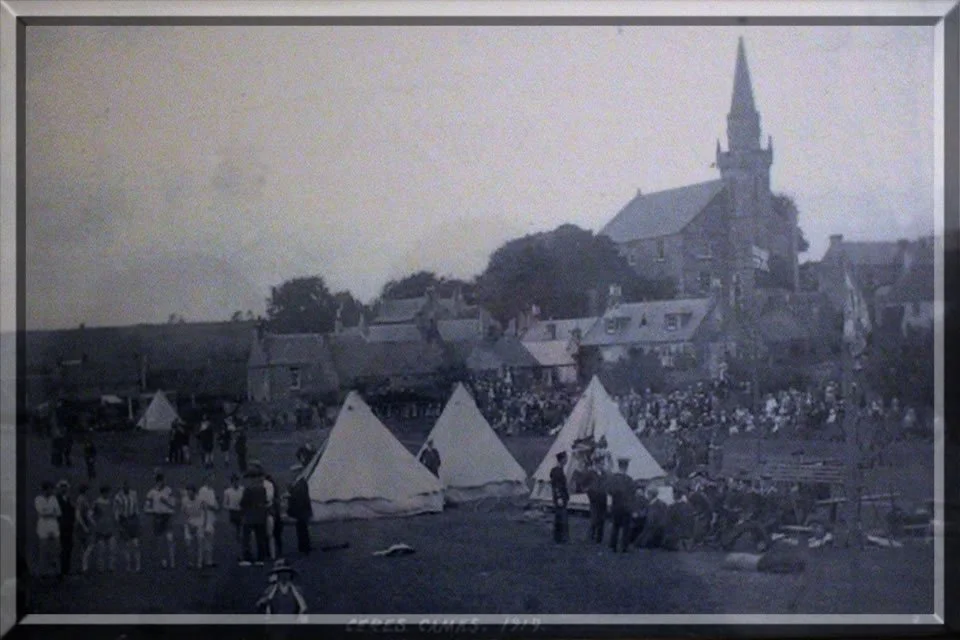
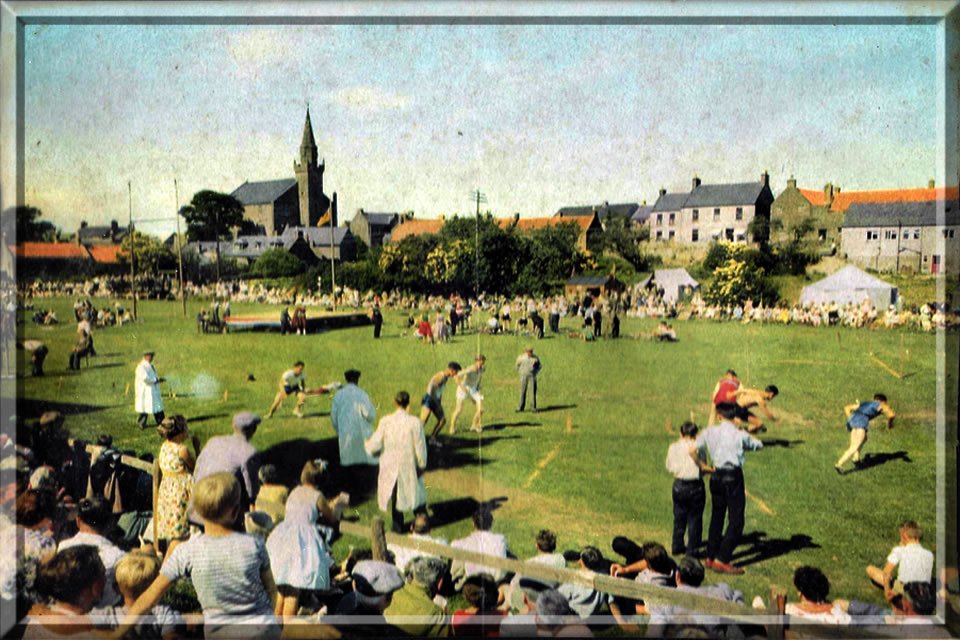
The rest of the day was taken up with the men’s and boys foot races, followed by the Sack Race, the Twin Race and the Hurdle Race. The crowds’ interest was maintained by the ladies and girls foot races, one of which only true virgin maids could take part!
The most spectacular event of the day was the Greasy Pole. The pole, a tall fir tree stripped of bark and branches was made slippery at the top with soft soap and the prize, usually a ham, was placed on top of the pole and two competitors would in turn attempt to climb the trunk and reach the prize. Although extremely popular, the pole proved impossible to climb and the event committee decided to withdraw the event in 1866.
‘See yon lad up the greasy pole,
A lad wi’ launchin cheeks an’ droll,
Sae fat his breeks will scarcely button,
Yet heart and sowl upon the mutton-‘
The Games Today
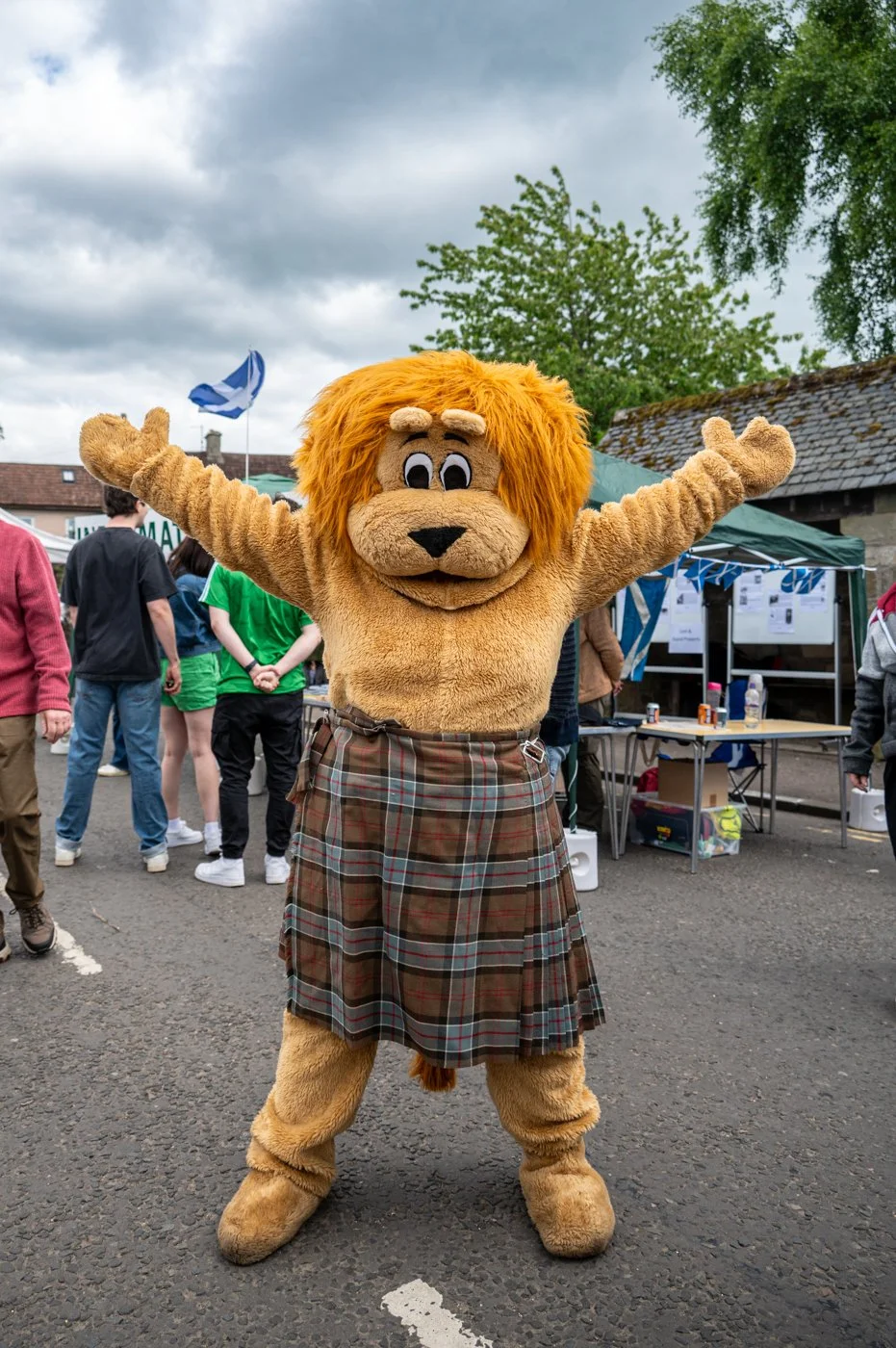
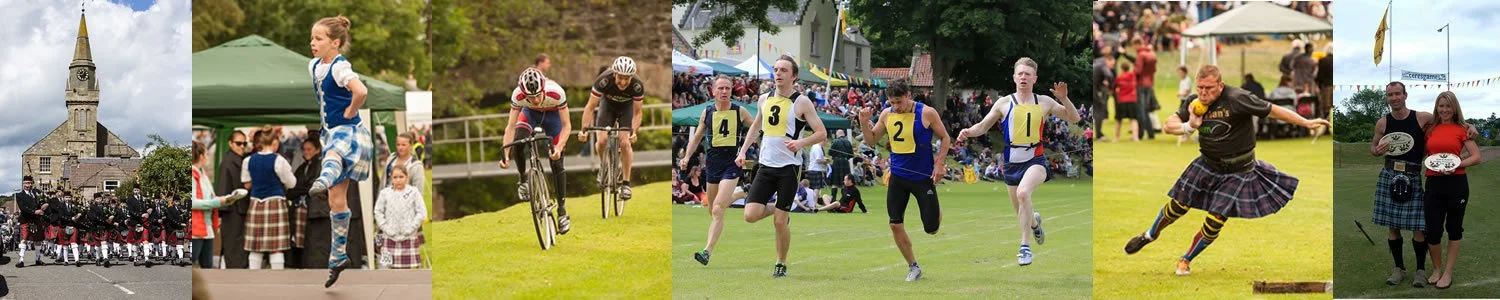
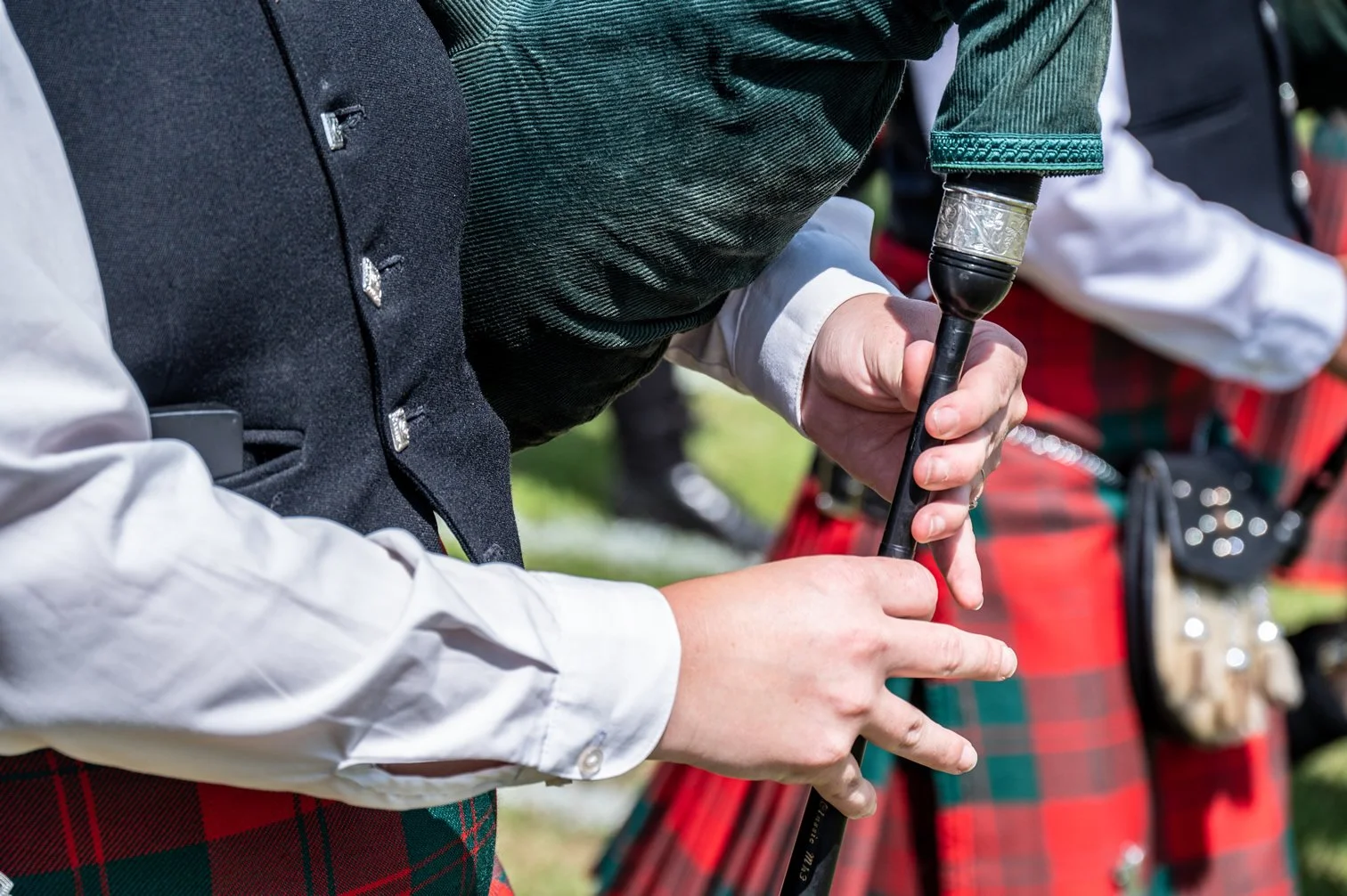
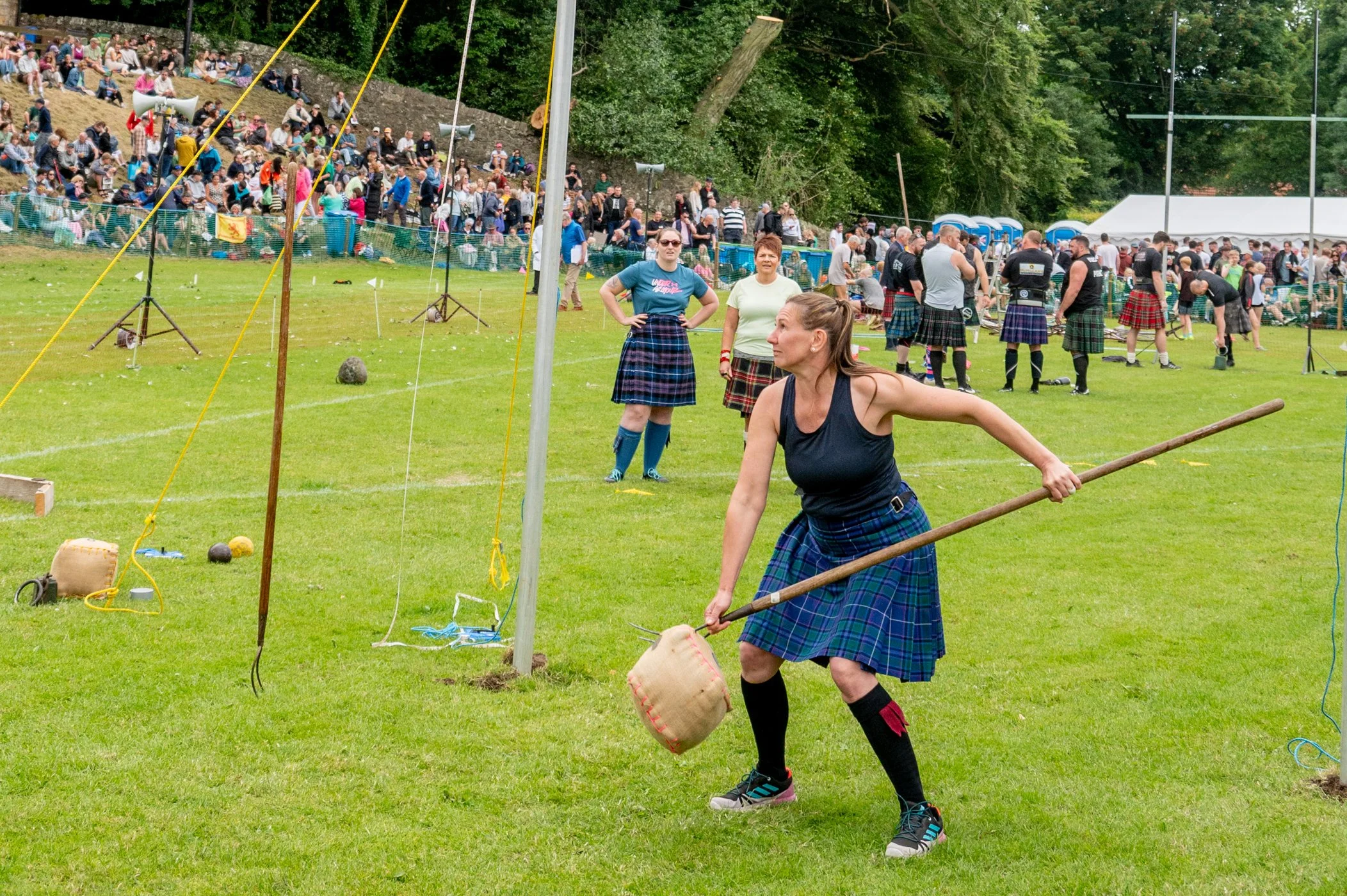
Gradually, the Games have evolved into what we see today. Pony races are no longer held having been deemed a mite dangerous following incidents over the years. Before the great day itself there is a weekend devoted to football and during the week before lots of events to get the locals involved. On the day itself, the pipe band will march through the village, The Chieftain will officially open the Games and the Highland Dancers will show off their skills in the middle of the field. The Games themselves are run according to Royal Scottish Highland Games Association rules with all the competitors fully registered and judged accordingly. The "Heavies" showing off the skills or strength and balance much prized in earlier times by the fighting men of the land and the Back Hold Wrestling, a Scottish event that is particularly hard fought for as the winners receive a unique Wemyss plate for their endeavours.